


Call Us Now
Landline: +86-750-6688281
Phone: +86 18127522581
Phone: +86-13302589039

Views: 0 Author: Site Editor Publish Time: 2026-03-20 Origin: Site
When an excavator rotates smoothly and precisely on a job site, most operators focus on the boom, bucket, or hydraulic system. However, behind every controlled rotation is a critical component: the swing gearbox. In our experience working with excavator drivetrain components, the swing gearbox plays a decisive role in how efficiently and reliably the upper structure of the excavator rotates. Choosing the right swing gearbox for a specific excavator model and size is not only about mechanical compatibility; it also affects torque delivery, operational stability, service life, and maintenance cost. If the gearbox is undersized, poorly matched, or built without proper durability, the excavator may experience slow rotation, vibration, abnormal noise, or premature wear. On the other hand, selecting a well-matched swing gearbox ensures stable rotation, smooth control, and long-term reliability under demanding construction conditions. Understanding how to choose the right swing gearbox is therefore an important step for equipment owners, maintenance teams, and machinery distributors.
A swing gearbox is the mechanical component that transfers hydraulic motor power into controlled rotational movement of the excavator’s upper structure. This system allows the cab, boom, and arm assembly to rotate relative to the undercarriage.
The swing system typically includes:
Hydraulic swing motor
Swing gearbox
Swing bearing (slewing ring)
Internal gears and shafts
Lubrication system
The swing gearbox reduces the high rotational speed of the hydraulic motor and converts it into higher torque output. This torque is what enables the excavator to rotate heavy loads smoothly while maintaining control.
Without a properly functioning swing gearbox, the excavator cannot perform accurate positioning or stable rotation during digging, loading, or lifting operations.
Selecting the correct swing gearbox is not simply about replacing a worn part. The gearbox must match the excavator’s weight class, hydraulic system capacity, and operational demands.
A well-matched gearbox provides several benefits:
Performance Factor | Impact on Excavator Operation |
Correct torque output | Enables smooth rotation with heavy loads |
Proper gear reduction ratio | Ensures balanced speed and control |
Durable gear materials | Improves service life |
Accurate internal alignment | Reduces vibration and noise |
Reliable sealing system | Prevents contamination and oil leakage |
If the gearbox specifications do not match the excavator model, several problems may occur, including reduced efficiency, unstable rotation, or accelerated wear.
One of the first steps in selecting the right swing gearbox is understanding the size category of the excavator. Different excavator classes require different torque levels and gearbox capacities.
Typical excavator categories include:
Excavator Size | Machine Weight | Typical Applications |
Mini excavator | 1–6 tons | Landscaping, small construction |
Compact excavator | 6–15 tons | Urban construction and utilities |
Medium excavator | 15–35 tons | General construction and earthmoving |
Large excavator | 35–90 tons | Mining and heavy-duty projects |
Ultra-large excavator | 90+ tons | Mining and large-scale excavation |
A swing gearbox designed for a 20-ton excavator will not perform correctly in a 40-ton machine because the torque demand is significantly higher.
Choosing the right swing gearbox requires evaluating several technical factors rather than focusing only on price or appearance.
Every excavator manufacturer designs machines with specific drivetrain configurations. The swing gearbox must match the mounting structure, shaft interface, and hydraulic motor characteristics of the machine.
Important compatibility aspects include:
Bolt pattern and mounting dimensions
Input shaft connection
Gear interface with the swing bearing
Hydraulic motor matching
Even small dimensional differences can create installation issues or reduce mechanical efficiency.
Torque capacity determines how much rotational force the gearbox can transmit. Excavators often rotate heavy loads such as soil, rocks, or demolition debris.
If the gearbox cannot handle the required torque, the following problems may occur:
Gear tooth wear
Internal overheating
Slippage or jerking motion
Shortened gearbox lifespan
A correctly sized swing gearbox ensures the excavator rotates smoothly even when lifting heavy materials.
The gear reduction ratio determines how motor speed is converted into output torque and rotational speed.
Higher reduction ratios generally produce:
Lower output speed
Higher torque
Lower ratios produce:
Faster rotation
Lower torque
Excavators require a balanced ratio that provides both smooth control and sufficient power for the rotating structure.
The durability of a swing gearbox depends heavily on the quality of its internal gears and heat treatment processes.
High-quality gearboxes typically feature:
Precision-machined gears
High-strength alloy steel
Proper heat treatment
Accurate tooth surface finishing
These factors improve load distribution and reduce internal wear during long operating hours.
Internal bearings support rotational loads and maintain alignment between gears. Poor bearing quality can cause excessive vibration or mechanical instability.
Important bearing characteristics include:
Load capacity
Lubrication efficiency
Heat resistance
Long-term durability
A well-designed bearing system helps the gearbox operate smoothly even under heavy loads.
Construction environments often involve dust, mud, water, and debris. A reliable sealing system protects the internal components of the swing gearbox from contamination.
Effective sealing helps:
Prevent lubricant leakage
Block external contaminants
Maintain internal lubrication quality
Lubrication is also essential for reducing friction and preventing gear damage.
Choosing a new swing gearbox often happens after operators notice performance issues. Recognizing early warning signs can help prevent more serious mechanical failures.
Common symptoms include:
Abnormal noise during rotation
Slower swing movement
Jerking or uneven rotation
Oil leakage from the gearbox housing
Excessive vibration
Overheating during operation
If these problems occur, inspecting the gearbox and related swing components is recommended.
When replacing a swing gearbox, equipment owners often decide between OEM parts and aftermarket alternatives.
Option | Advantages | Considerations |
OEM gearbox | Guaranteed compatibility | Higher cost |
High-quality aftermarket | Competitive price and availability | Must verify specifications |
Rebuilt gearbox | Lower cost | Shorter service life possible |
A high-quality aftermarket gearbox from a reliable manufacturer can provide performance comparable to OEM components when properly designed and manufactured.
Even the best swing gearbox cannot perform properly if installed incorrectly. Proper installation ensures correct alignment and smooth mechanical operation.
Important installation steps include:
Checking mounting surfaces
Confirming bolt torque specifications
Ensuring proper lubrication
Verifying alignment with the swing bearing
Inspecting hydraulic motor connection
Careful installation helps prevent premature wear and mechanical damage.
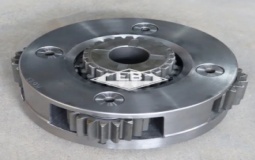
Regular maintenance can significantly extend the service life of a swing gearbox.
Recommended maintenance practices include:
Maintenance Task | Benefit |
Checking lubrication levels | Prevents internal wear |
Inspecting seals | Reduces contamination risk |
Monitoring noise and vibration | Detects early problems |
Checking mounting bolts | Maintains structural stability |
Periodic oil replacement | Improves gearbox longevity |
Preventive maintenance reduces downtime and protects expensive components.
In our experience, some buyers encounter problems because of avoidable mistakes during gearbox selection.
Common mistakes include:
Choosing based only on price
Ignoring torque requirements
Selecting an incompatible mounting design
Overlooking gear material quality
Purchasing from unknown suppliers
Careful specification review helps avoid these risks.
Excavators operate in demanding environments where reliability is essential. The swing system must perform consistently across thousands of working hours.
A well-designed swing gearbox supports:
Precise rotation control
Efficient load handling
Reduced maintenance costs
Improved operational safety
This is why selecting the right gearbox is not just a technical decision but also a long-term investment in equipment performance.
Choosing the right swing gearbox for your excavator model and size requires careful attention to compatibility, torque capacity, gear ratio, material quality, and operating conditions. When these factors are properly evaluated, the excavator can maintain smooth and reliable rotation even under demanding workloads. In our experience, equipment owners who take the time to select the correct gearbox benefit from improved machine performance, reduced maintenance frequency, and longer component life. A reliable swing gearbox not only supports efficient excavation operations but also protects other drivetrain components from unnecessary stress.
For companies or equipment owners who want to learn more about swing gearbox options and excavator drivetrain components, visiting www.lb-machinery.com. can provide additional technical information. If you are evaluating replacement parts or sourcing reliable excavator components, contacting the team at www.lb-machinery.com may help you identify suitable solutions based on your excavator model and operational requirements.
A swing gearbox transfers power from the hydraulic motor to the excavator’s rotating structure, allowing the upper body of the machine to rotate smoothly during digging and loading operations.
To choose the correct swing gearbox, you need to check the excavator model, machine weight, torque requirements, mounting dimensions, and gear ratio specifications.
Using a gearbox from another model is not recommended unless the specifications match exactly. Differences in torque capacity, mounting dimensions, or gear ratios can cause performance issues.
The lifespan of a swing gearbox depends on operating conditions, maintenance quality, and manufacturing standards. With proper lubrication and maintenance, it can operate reliably for many years.
