


Call Us Now
Jannie Ye: +86 17728636936
Jenny: +86 18127522581
Miriam: +86 15018897468

Views: 0 Author: Site Editor Publish Time: 2026-01-07 Origin: Site
Have you ever wondered how your car’s engine power is transferred to the wheels? Two critical components, the final driveand the differential, are responsible for this crucial task. Understanding the difference between these two can enhance your knowledge of vehicle mechanics and improve maintenance practices.
In this article, we will explore the roles of the final drive and the differential, how they work, and the key differences between the two. We’ll also dive into their importance in various vehicles, from everyday cars to heavy machinery.
The final drive is the last reduction gear system in the drivetrain. Its purpose is to reduce the speed of the power coming from the engine, so the wheels can rotate at a suitable speed. The final drive is typically located in the axle housing or, in some cases, within the gearbox itself.
In a typical passenger vehicle, the final drive uses a gear system, most often a crown gear and pinion arrangement, to slow down the power from the engine and transfer it to the wheels. This system is referred to as a gear reduction unit because it reduces the high rotational speed from the engine to a lower speed that the wheels can handle. This reduction is critical for the vehicle to move efficiently and safely.
The final drive consists of several key components that work together to transfer power effectively:
Pinion Gear: The pinion gear is the small gear attached to the drive shaft. It meshes with the larger crown gear to transfer power.
Crown Gear: The crown gear is a large, circular gear that meshes with the pinion gear. It slows down the speed of the drive shaft's rotation and transmits that power to the wheels.
Axle Housing: This is the casing that holds the gears and ensures proper alignment within the drivetrain.
These components work in tandem to reduce the speed of the engine's power and make it usable for the wheels.
The final drive system is essential in both passenger vehicles and off-highway machinery. It is used in all vehicles that need to convert high-speed engine power into the lower-speed power that turns the wheels. Some examples of its applications include:
● Passenger Vehicles: In both front-wheel drive (FWD) and rear-wheel drive (RWD) cars, the final drive is located in the axle housing and is crucial for power transfer from the transmission to the wheels.
● Off-Highway Vehicles: Off-road vehicles, such as farm tractors, earth movers, and bulldozers, use final drives to provide additional torque to the wheels or tracks. These vehicles require significant power to perform heavy-duty tasks, and the final drive helps achieve that.
Tips: Regular maintenance of the final drive, including checking oil levels and inspecting for leaks, can prevent costly repairs and keep the drivetrain in optimal condition.
The differential is a mechanical device that is used to distribute the engine's power to the wheels while allowing them to rotate at different speeds, particularly when the vehicle is turning. During a turn, the inside wheel travels a shorter distance than the outside wheel, so the differential allows these wheels to rotate at different speeds to avoid excessive wear or strain.
Without a differential, both wheels would be forced to rotate at the same speed, which would create excessive friction, heat, and stress on the drivetrain. This is especially problematic when turning, as the wheels would have to slip or drag.
There are several types of differentials, each with its own advantages and applications:
Open Differential: The most common type of differential, it splits the engine’s torque evenly between the two drive wheels. However, an open differential can be problematic when there is low traction, as it will send power to the wheel with the least resistance, causing one wheel to spin while the other remains stationary.
Limited-Slip Differential (LSD): A limited-slip differential uses a clutch system or mechanical limited-slip components to prevent excessive power from being sent to the wheel with the least resistance. This improves traction, particularly in slippery conditions, and ensures that both wheels receive adequate power.
Locking Differential: A locking differential can lock the two wheels together to rotate at the same speed, which can be helpful in off-road driving when both wheels need to provide equal traction.
The differential consists of several components that work together to allow the wheels to rotate at different speeds while sharing the same power. Most differentials use bevel gears or spiral bevel gears, which allow the gears to mesh at an angle. This angle is important because it enables the wheels to turn at different speeds while still receiving power from the engine.
● Bevel Gears: Bevel gears are commonly used in differentials and are angled to mesh with one another, dividing power between the wheels.
● Spiral Bevel Gears: These are a variation of bevel gears with curved teeth, allowing for smoother power transfer.
● Hypoid Gears: These gears are a type of spiral bevel gear with the pinion gear positioned below the centerline of the crown wheel, offering improved efficiency and quieter operation.
Differentials also use a series of smaller gears called side gears and pinion gears to distribute the torque evenly to each wheel.
The primary difference between the final drive and the differential lies in their functions:
Final Drive: The final drive's main purpose is to reduce the speed of the engine's output to a level that the wheels can handle. It does this through a gear reduction system, such as the crown and pinion gears.
Differential: The differential’s primary function is to divide the engine's power between the two drive wheels while allowing them to rotate at different speeds, especially during turns.
While both are essential for vehicle movement, the final drive is concerned with slowing down the engine’s power, while the differential is concerned with distributing that power evenly to the wheels.
Final Drive: The final drive is typically located at the end of the drivetrain, often inside the axle housing, just before the wheels. It works alongside the differential to reduce speed and provide power.
Differential: The differential is located between the wheels, either in the axle or transaxle, to allow the wheels to rotate at different speeds.
Final Drive Gear: Uses a crown and pinion gear system to achieve speed reduction. These gears work together to reduce the rotational speed of the power from the engine.
Differential Gear: Uses bevel gears to divide the engine’s torque between the two drive wheels, allowing them to rotate at different speeds. The gears used in the differential allow for smooth power transfer while turning.
Notes: Understanding these mechanical differences is important for diagnosing drivetrain issues and making informed decisions when repairing or replacing components.
Table: Comparison of Final Drive and Differential
Feature | Final Drive | Differential |
Primary Function | Speed reduction and power transmission | Torque division and speed variance during turns |
Location in Drivetrain | Near the axle or in the gearbox | Between the wheels, often in the axle |
Key Components | Crown and pinion gears | Bevel or spiral bevel gears |
Applications | Passenger vehicles, heavy machinery | All vehicles with drive wheels, especially FWD and RWD |
Maintenance Focus | Oil level, leaks, gear wear | Backlash adjustment, gear wear |
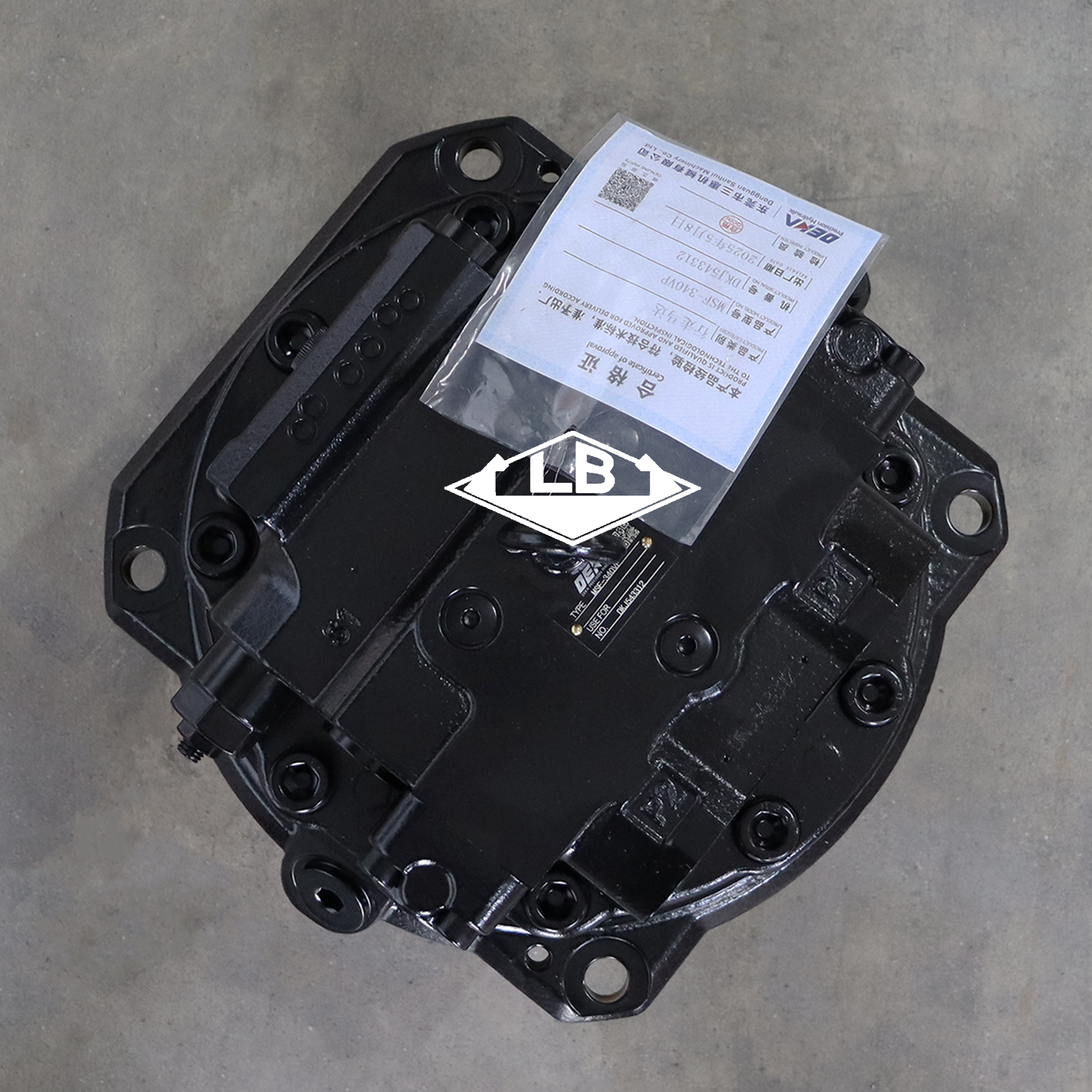
In off-highway vehicles like farm tractors, bulldozers, and earth movers, the final drive plays a crucial role in providing the extra torque needed to move heavy wheels or tracks. These machines require significantly more power to perform their tasks, such as digging or hauling, and the final drive ensures that the engine’s power is appropriately reduced and transferred to the wheels for maximum torque.
Off-highway final drives are designed with heavy-duty gears to withstand the extreme stress and torque encountered during operation. These systems often feature larger gears than those found in passenger vehicles, allowing for a higher reduction ratio and greater torque output. Additionally, off-highway vehicles may use multiple final drive systems to ensure power is distributed evenly across all wheels or tracks.
The differential directly influences a vehicle's handling, especially when cornering. Without a differential, the wheels would be locked together, causing significant strain on the drivetrain. Additionally, in slippery conditions, the differential ensures that both wheels are still powered, though with an open differential, the wheel with the least traction could lose power. Limited-slip differentials solve this issue by applying torque to both wheels, ensuring better traction and handling.
Both the final drive and the differential contribute to the efficient distribution of power. While the final drive focuses on reducing speed, the differential ensures that power is appropriately distributed to the wheels, allowing them to rotate at the required speeds for efficient vehicle performance.
Regular inspection of the final drive is essential to ensure smooth vehicle operation. Check the oil level, look for leaks, and inspect the gear components for wear and tear. If maintenance is neglected, it can lead to costly repairs or decreased performance.
Differentials require regular checks for backlash, which is the clearance between the crown and pinion gears. Incorrect backlash settings can lead to unwanted noise and potential damage. A Dial Test Indicator (DTI) is used to measure and correct backlash.
Tips: Make sure to perform regular differential maintenance to avoid issues such as gear noise or uneven torque distribution, which can affect vehicle performance.
The final drive and differential, though closely related, serve distinct functions in the drivetrain. The final drive reduces speed, ensuring the wheels rotate at the correct pace. Meanwhile, the differential distributes torque effectively, particularly when turning. Both components are essential for vehicle efficiency, and understanding their differences helps with maintenance and troubleshooting. Keeping these systems in optimal condition ensures long-term vehicle performance. At Jiangmen Liba Machinery Co., Ltd., we provide products designed to enhance drivetrain reliability and performance, adding value through quality engineering.
A: A final drive is the last gear reduction in the drivetrain, transferring engine power to the wheels and ensuring the proper speed for rotation.
A: The final drive reduces the engine speed for the wheels, while the differential distributes torque between the wheels, especially during turns.
A: The final drive provides the necessary torque for off-road vehicles, enabling them to perform heavy-duty tasks in challenging environments.
A: The final drive ensures efficient speed reduction, allowing the vehicle to operate smoothly, while the differential ensures proper torque distribution for optimal traction.
