


Call Us Now
Jannie Ye: +86 17728636936
Jenny: +86 18127522581
Miriam: +86 15018897468

Views: 0 Author: Site Editor Publish Time: 2025-11-14 Origin: Site
Excavators rely on a precise combination of mechanical and hydraulic components to operate efficiently on construction sites, quarries, and mining operations. At the core of this system lies the travel gearbox, a component that transforms hydraulic energy into the mechanical force required to move the machine across challenging terrains. Understanding what happens inside a travel gearbox is not just a matter of technical curiosity; it’s essential for maintenance teams, equipment operators, and project managers who aim to minimize downtime, optimize performance, and select the most suitable replacement or upgrade parts. LB, as a leading manufacturer of high-quality travel gearboxes, combines advanced engineering, precision machining, and rigorous quality assurance to deliver components that withstand the harsh demands of modern construction equipment.
The performance and longevity of an excavator’s travel system depend largely on the internal design and material quality of its travel gearbox. By exploring its internal mechanics, key components, materials, tolerances, and testing processes, operators gain insight into what ensures smooth operation and reliability, enabling them to make informed decisions when sourcing replacements or planning preventative maintenance.
A travel gearbox serves as the critical intermediary between the hydraulic motor and the tracks or wheels of an excavator. Its primary function is to convert rotational energy from the hydraulic motor into the precise torque and speed needed to move the machine effectively. Unlike simple gear systems, travel gearboxes are engineered to handle extreme loads, variable speeds, and harsh environmental conditions while maintaining high reliability.
The process begins with the hydraulic motor, which generates rotational power by converting pressurized hydraulic fluid into torque. This rotational energy is transferred to a small pinion gear, which interfaces with a larger planetary gear system. The planetary stage is the heart of the gearbox: it distributes load across multiple gears, enabling high torque transmission in a compact form factor. Planetary gears consist of a central sun gear, multiple planet gears, and a surrounding ring gear. As the sun gear rotates, it drives the planet gears, which in turn rotate around the central axis and transmit power to the final ring gear. This final ring gear connects directly to the excavator’s tracks, translating the controlled torque into smooth and reliable motion.
The planetary arrangement is particularly advantageous because it allows for multiple load paths, reducing stress on individual gears and minimizing wear. It also provides flexibility in designing different reduction ratios without increasing the size of the gearbox excessively. The result is a compact, high-performance system that balances torque output with operational speed, even under heavy load conditions.
Reduction ratio is a key specification in any travel gearbox. It determines how many times the input pinion must rotate to achieve one full rotation of the output ring gear. A higher reduction ratio multiplies torque, allowing the excavator to push heavy loads, climb steep slopes, and operate in muddy or uneven terrain without overloading the hydraulic motor. Conversely, a lower reduction ratio prioritizes speed over torque, which is useful for lighter excavators or operations that require rapid movement across relatively smooth surfaces.
Selecting the correct reduction ratio is essential for optimizing machine efficiency, fuel consumption, and component longevity. Too low a ratio may overwork the motor when under load, while too high a ratio can reduce travel speed unnecessarily. LB’s travel gearboxes are designed with a variety of reduction ratios to suit different jobsite applications, ensuring that operators can find a solution that matches both machine specifications and operational demands.
Every component inside a travel gearbox plays a vital role in transmitting power efficiently and reliably. Understanding these parts helps operators recognize early signs of wear and plan for maintenance or replacement proactively.
The planetary carrier supports the planet gears, allowing them to orbit the sun gear evenly. High-quality carriers are machined from premium alloy steel and heat-treated for strength. Properly designed carriers distribute load evenly across all planet gears, reducing localized stress and minimizing the risk of gear failure. The number and size of planet gears can vary depending on the torque requirements and intended operational use. More planets provide smoother load distribution and higher torque capacity, which is critical for heavy-duty excavators operating in demanding environments such as rock quarries or mining sites.
The sun gear is positioned at the center of the planetary assembly and drives the surrounding planet gears. The ring gear surrounds the planetary set and transmits torque to the output shaft. Backlash, the small clearance between gear teeth, must be carefully controlled: too much backlash can lead to vibration, noise, and imprecise movement, while too little can create excessive stress on the gears, accelerating wear. Precision manufacturing ensures optimal gear engagement, smooth rotation, and long-term reliability. At LB, sun and ring gears are machined to exacting tolerances to maintain smooth power transfer under heavy operational loads.
Bearings provide support and reduce friction for rotating components, while seals prevent dirt, dust, water, and hydraulic fluid from contaminating internal components. High-quality bearings can handle both radial and axial loads, allowing the gearbox to operate under heavy pressure without failure. Effective sealing solutions, such as multiple-lip oil seals and labyrinth designs, protect the internal gears and prevent lubrication loss. Contaminants entering the gearbox are a leading cause of premature failure, making sealing technology a critical aspect of long-term reliability.
The gearbox housing maintains precise alignment between gears and bearings, ensuring consistent performance. Misalignment can cause uneven wear, increase noise, and reduce the overall efficiency of the gearbox. Housing material selection and machining precision are crucial for structural integrity. Flanges provide secure attachment points to the hydraulic motor and track assembly, preventing movement that could compromise gear engagement or bearing performance. LB’s housings are manufactured using advanced CNC machining techniques to ensure perfect alignment and minimal tolerances, even under high-stress conditions.
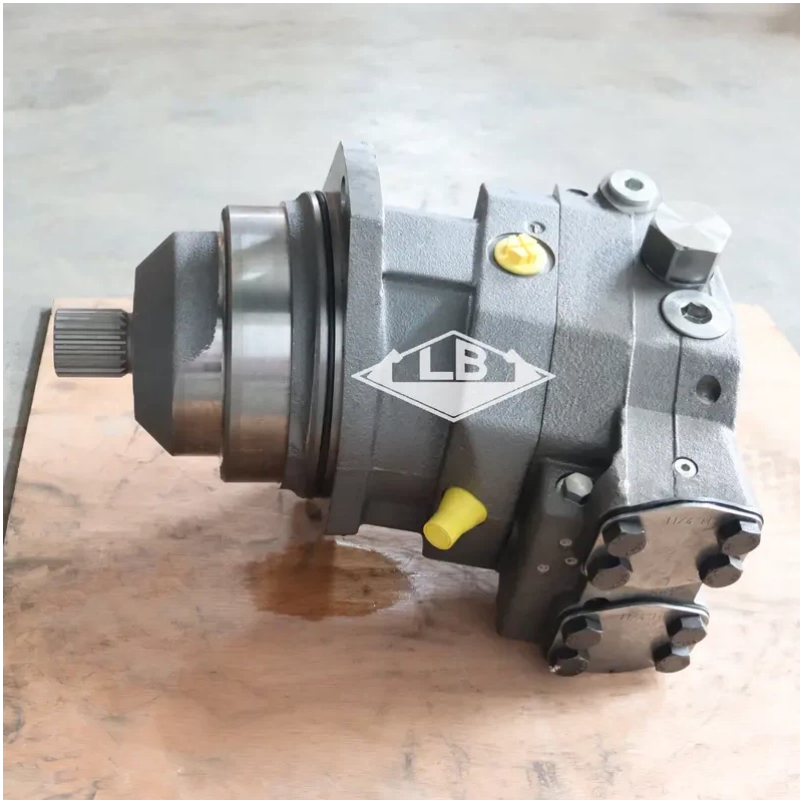
Materials and surface treatments are fundamental to a travel gearbox’s durability. Gears and shafts are commonly made from high-grade alloy steels that combine strength, toughness, and wear resistance. To further enhance durability, LB applies advanced heat treatment techniques such as:
Carburizing: Hardens the surface of gears while maintaining a tough interior to resist shock loads.
Nitriding: Creates a hard, wear-resistant surface without distortion, ideal for high-speed or precision gears.
Quenching and tempering: Improves overall toughness while providing a balance between hardness and ductility.
Surface finishing processes, such as grinding and polishing gear teeth, reduce friction, minimize noise, and improve efficiency. The combination of premium materials, heat treatment, and precision finishing ensures that LB travel gearboxes maintain high performance and long service life even under extreme working conditions.
The difference between standard replacement gearboxes and premium units lies in machining precision and adherence to tolerances. Critical dimensions such as gear tooth profile, concentricity, and surface finish directly influence operational efficiency and longevity. Even slight deviations can cause excessive vibration, noise, heat buildup, and premature wear.
LB’s travel gearboxes are manufactured with tight tolerances and superior surface finishes. Gear teeth are ground to exact specifications to ensure smooth engagement, while shafts and bearing seats are machined to precise concentricity. These precision standards improve efficiency, reduce maintenance requirements, and extend the service life of both the gearbox and the connected hydraulic motor.
Rigorous testing ensures that every travel gearbox performs reliably in the field. Key validation processes include:
Load Testing: Simulates real-world operational stress, confirming that the gearbox can withstand rated torque without deformation.
Noise and Vibration Checks: Detects misalignment, gear imperfections, or bearing defects to prevent early failure.
Leak Testing: Ensures seals and housings maintain fluid integrity under pressure and temperature variations.
Operational Longevity Trials: Extended testing under repeated load cycles to verify durability over time.
LB maintains strict quality assurance standards and documents test results for each production batch. These rigorous procedures give operators confidence that their travel gearboxes will meet performance expectations in the most demanding environments.
Matching gearbox specifications to your application ensures optimal performance and longevity. Factors to consider include:
Torque rating: Machines performing heavy-duty work, such as digging in rocky soil or pushing large loads, require high torque gearboxes to prevent motor overloading.
Reduction ratio: Determines the balance between speed and torque; essential for ensuring that the excavator moves efficiently across different terrains.
Sealing class: Excavators operating in muddy, wet, or dusty conditions need robust seals to prevent contamination and maintain lubrication integrity.
Gear quality and heat treatment: Directly influence service life and reliability in high-load applications.
LB offers a range of travel gearboxes optimized for different operational conditions. From high-torque units designed for mining and heavy construction to speed-optimized models for lighter applications, each gearbox is engineered to maintain reliable performance and reduce downtime.
In conclusion, understanding the inner workings of a travel gearbox provides invaluable insight into excavator performance, reliability, and maintenance requirements. From the hydraulic motor to the planetary gears, bearings, seals, and housing, each component plays a pivotal role in delivering smooth, efficient power transmission. Precision machining, high-grade materials, heat treatment, and rigorous testing define the difference between standard and premium gearboxes. LB specializes in producing travel gearboxes that meet the highest standards of durability and performance, ensuring that machines operate reliably in the most challenging conditions. For detailed product specifications, compatibility information, or technical support, contact us today to explore solutions that fit your excavator’s needs.
Q1: What is the main function of a travel gearbox on an excavator?
A: The travel gearbox converts hydraulic motor power into controlled torque and speed, enabling the excavator to move efficiently across challenging terrain.
Q2: How does a planetary gear system benefit the gearbox?
A: Planetary gears distribute load evenly, increase torque output, and allow compact design while maintaining smooth operation under heavy stress.
Q3: Why are heat treatment and surface finishing critical for gears?
A: They enhance wear resistance, reduce friction, prevent pitting, and extend the operational life of gearbox components.
Q4: What should operators consider when selecting a travel gearbox?
A: Key factors include torque rating, reduction ratio, sealing class, material quality, and intended jobsite conditions to ensure reliability and optimal performance.
