


Call Us Now
Jannie Ye: +86 17728636936
Jenny: +86 18127522581
Miriam: +86 15018897468

Views: 0 Author: Site Editor Publish Time: 2026-03-25 Origin: Site
A machine that suddenly produces grinding noise during rotation, develops noticeable backlash, or shows metal particles in oil is sending a clear warning signal. At this stage, continuing operation without inspection can lead to more severe damage and higher repair costs. Properly dismantling and inspecting the swing gearbox is not just a maintenance step—it is a critical process that determines whether the component can be reused, repaired, or needs full replacement. LB, as a manufacturer of swing reducers since 2008, supports customers worldwide not only with reliable products but also with practical knowledge that helps extend equipment life and improve maintenance decisions.
One of the earliest signs of gearbox problems is unusual noise during rotation. This may include grinding, knocking, or irregular sounds that were not present during normal operation. Backlash, where the upper structure moves slightly before engaging, is another common symptom.
Weak swing performance under load also indicates potential internal wear. When torque transmission becomes inefficient, the excavator may struggle to rotate smoothly, especially in demanding tasks.
The condition of the gearbox oil provides valuable insight into internal health. If the oil appears discolored, contains metal particles, or shows signs of contamination, it is often a sign of gear or bearing wear.
Ignoring this early warning can result in further internal damage, making repair more complex and costly.
Oil leakage from seals or excessive heat buildup during operation may indicate internal stress or sealing failure. These issues often develop gradually and become more noticeable over time.
Dismantling the gearbox at this stage allows for early detection and prevents unexpected failure in the field.
Before starting any dismantling process, it is essential to ensure that the machine is completely shut down and isolated. Hydraulic pressure must be released to prevent accidental movement or injury.
This step is fundamental to maintaining a safe working environment.
Swing gearboxes are heavy and require proper lifting equipment. Attempting to remove components without adequate support can lead to accidents or damage to the parts.
Using appropriate lifting tools ensures safe handling during disassembly.
External dirt and debris should be removed before opening the gearbox. This prevents contaminants from entering the internal components during dismantling.
A clean surface also makes it easier to identify potential leaks or damage.
Each component inside the gearbox has a specific position and orientation. Marking parts and recording their arrangement helps ensure accurate reassembly.
Without proper labeling, reinstallation errors may occur, leading to performance issues.
Having the right tools prepared in advance improves efficiency and safety. Trays for organizing parts, marking tools for identification, and cleaning materials for inspection are all essential.
During dismantling, multiple components are removed in sequence. Keeping these parts organized prevents confusion and ensures that each piece can be reinstalled correctly.
A structured approach reduces the risk of missing or misplacing parts.
Inspection requires a clean and well-lit workspace. Dirt or poor lighting can hide small defects such as cracks or wear patterns.
A controlled environment allows for more accurate evaluation of component condition.
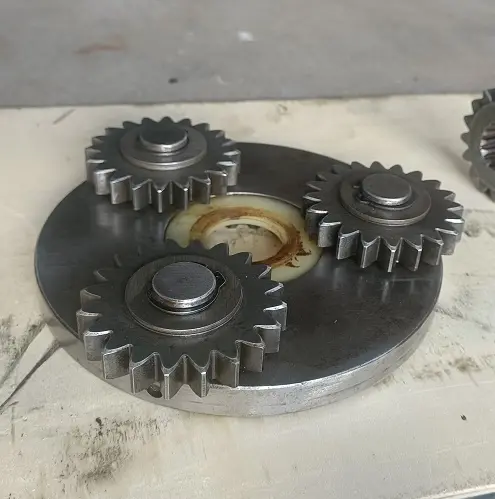
The first step in dismantling is to drain all lubricant from the gearbox. This not only reduces mess but also allows for inspection of oil condition, which may reveal early signs of wear.
Bolts and covers should be removed systematically to avoid unnecessary stress on components. Using the correct sequence prevents deformation and ensures safe removal.
Large internal components such as ring gears must be handled carefully using lifting equipment. Sudden movement or improper handling can cause damage.
Components should be separated gently. Forcing parts apart may cause additional damage, making it difficult to assess the original condition.
Patience and proper technique are essential during this stage.
Gear teeth are one of the most critical components to inspect. Surface damage such as pitting or flaking indicates fatigue, while scoring suggests lubrication issues.
These signs help determine whether the gears can continue to function or require replacement.
Bearings should be checked for smooth rotation, tight fit, and signs of overheating. Discoloration or rough movement often indicates wear or failure.
Damaged bearings can affect overall gearbox performance and should not be ignored.
The gearbox housing and seals play a key role in protecting internal components. Cracks, deformation, or worn seals can lead to contamination and leakage.
Ensuring the integrity of these parts is essential for long-term reliability.
The type and location of debris inside the gearbox can provide clues about underlying issues. For example, metal particles near specific components may indicate localized wear.
Understanding these patterns helps identify root causes rather than just symptoms.
Not all visible wear requires replacement. Minor surface marks may not affect performance, while deeper damage such as cracks or heavy pitting indicates serious issues.
Careful evaluation helps avoid unnecessary replacement while ensuring safety.
In some cases, only one component may be damaged, such as a bearing or gear. Replacing that part can restore function without replacing the entire gearbox.
This approach can be cost-effective if the rest of the components remain in good condition.
If multiple components show wear or if the gearbox has been used extensively, replacing the entire unit may be more reliable. This reduces the risk of repeated failures and additional downtime.
Repairing only the visibly damaged component without checking related parts can lead to repeated failure. Other components may already be worn but not yet showing obvious signs.
Lubrication plays a critical role in gearbox performance. Ignoring oil condition or contamination history can result in incomplete diagnosis.
Skipping detailed inspection during reassembly may lead to unresolved issues. A thorough check of all components ensures long-term reliability.
Inspection Point | What to Look For | What It May Indicate | Recommended Action |
Gear Teeth | Pitting, cracks, wear | Fatigue or overload | Replace gears if severe |
Bearings | Noise, looseness, discoloration | Bearing failure | Replace bearings |
Oil Condition | Metal particles, discoloration | Internal wear | Clean and inspect further |
Seals | Leakage, damage | Contamination risk | Replace seals |
Housing | Cracks, deformation | Structural damage | Repair or replace |
Safe dismantling is only the first step in maintaining a gearbox. The real value comes from careful inspection and accurate judgment of component condition. By understanding wear patterns and identifying root causes, operators can make informed decisions about repair or replacement. LB continues to provide high-quality swing reducers and technical support to help customers maintain efficient and reliable equipment. For assistance with inspection results or replacement options, contact us to find the right solution for your slewing gearbox system.
1. When should I dismantle a swing gearbox?
When you notice abnormal noise, oil contamination, or reduced performance, dismantling helps identify the problem early.
2. Can I reuse gearbox parts after inspection?
Some parts can be reused if wear is minimal, but critical components with damage should be replaced.
3. What is the most common cause of gearbox failure?
Poor lubrication, contamination, and heavy load conditions are common causes.
4. Is it better to repair or replace a swing gearbox?
It depends on the level of damage. Severe wear often makes full replacement a more reliable option.
