


Call Us Now
Jannie Ye: +86 17728636936
Jenny: +86 18127522581
Miriam: +86 15018897468

Views: 0 Author: Site Editor Publish Time: 2026-03-20 Origin: Site
A large number of gearbox inquiries fail not because buyers lack interest, but because key details are overlooked during selection. Matching only the excavator name without considering size class, working conditions, and configuration differences often leads to incorrect orders, installation problems, or early failure. A properly selected swing gearbox ensures stable rotation, efficient torque transmission, and long service life. As a professional manufacturer of swing reducers since 2008, LB supports global customers in identifying the right configuration for different excavator models and applications, helping reduce risk, improve matching accuracy, and avoid costly downtime.
It is common for buyers to start with the excavator model, which is a necessary first step. However, relying only on the model name can be misleading. Excavator manufacturers often release updated versions within the same model family over time. These updates may involve changes in hydraulic systems, structural layout, or internal component design.
As a result, two machines with the same model name but different production years may require different swing gearbox configurations. Even small design adjustments can affect mounting points, shaft dimensions, or internal ratios. This is why experienced buyers always go beyond the model name and verify additional details before making a decision.
Another factor that is often overlooked is the impact of regional production differences. Excavators manufactured for different markets may have variations in specifications due to local regulations, operating environments, or customer requirements.
Serial numbers also provide valuable information about production batches. Manufacturers may introduce improvements or changes within certain serial ranges, which means the gearbox used in earlier units may not be identical to later versions.
Providing accurate model codes, serial numbers, and region of use significantly improves the chances of selecting the correct gearbox.
While model and serial information are helpful, OEM part numbers remain one of the most reliable references for compatibility. Cross-checking the original part number ensures that the replacement gearbox meets the same performance and installation requirements.
In many cases, combining model data with part-number verification creates a more complete and accurate selection process.
Excavators vary greatly in size, and this directly affects the requirements of the swing system. Mini excavators prioritize smooth and precise movement, while larger machines require significantly higher torque to rotate heavier upper structures.
Selecting a gearbox designed for a smaller machine and applying it to a larger one will result in insufficient torque, reduced efficiency, and accelerated wear. On the other hand, using an oversized gearbox for a small machine may increase cost without delivering meaningful benefits.
As excavator size increases, the load on the swing system becomes more complex. The gearbox must handle not only static weight but also dynamic forces generated during digging, lifting, and rotation.
Heavy-duty applications place additional stress on gears and bearings, requiring stronger materials and more robust design. This is why large excavators often use gearboxes with higher load capacity and reinforced internal structures.
Even if a gearbox is technically compatible with a specific model, it may not perform well in certain working conditions. For example, a machine used for light landscaping has very different requirements compared to one used in mining or demolition.
Understanding how the machine is used in real conditions is essential for selecting a gearbox that delivers both performance and durability.
Torque determines the ability of the gearbox to rotate the excavator under load. It is one of the most critical parameters in gearbox selection. If the torque capacity is too low, the machine may struggle to rotate smoothly, especially under heavy loads.
Selecting a gearbox with sufficient torque capacity ensures stable operation and prevents excessive stress on internal components.
The reduction ratio defines how the input speed from the motor is converted into output torque. A higher reduction ratio increases torque while reducing rotational speed, while a lower ratio allows faster movement but less torque.
Choosing the correct ratio is essential for achieving the right balance between speed and power, depending on the machine’s application.
The gearbox must be compatible with the motor’s input speed. If the input speed is too high or too low for the gearbox design, it can lead to inefficient operation, overheating, or premature wear.
Matching input characteristics ensures smooth and reliable performance over time.
Physical compatibility is equally important. The gearbox must match the excavator’s mounting position, bolt pattern, and shaft connection. Even minor mismatches can lead to installation difficulties or alignment issues.
Careful verification of these details helps avoid costly installation errors.
Different applications place different demands on the swing system. Machines used in quarry or demolition environments experience higher impact loads and continuous stress, which require more durable gearboxes.
In contrast, machines used for lighter tasks may prioritize smooth operation and efficiency over extreme durability.
Machines that operate with continuous rotation generate more heat and wear in the gearbox. These conditions require gearboxes designed for high endurance and effective heat management.
Intermittent use places less stress on components, but reliability is still essential for maintaining consistent performance.
Environmental factors such as dust, moisture, and temperature variations can significantly affect gearbox performance. In harsh conditions, better sealing and corrosion-resistant materials are necessary to protect internal components.
Selecting a gearbox designed for the operating environment improves longevity and reduces maintenance frequency.
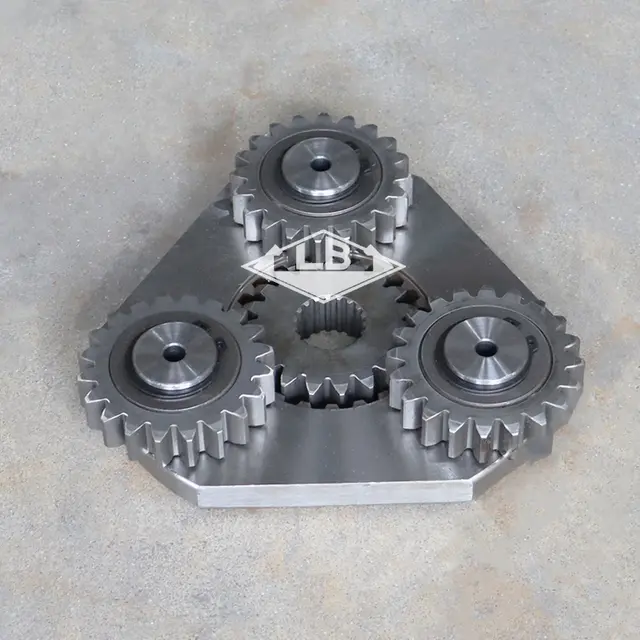
Providing detailed information helps suppliers identify the correct product quickly. Photos of the existing gearbox and installation area can reveal important details that may not be obvious from specifications alone.
Clarifying whether a standalone gearbox or a complete assembly is required prevents confusion during the ordering process. This also affects installation and compatibility considerations.
Detailed technical specifications are essential for ensuring compatibility. Dimensions, gear tooth count, and connection interfaces must match the original design to ensure proper installation and performance.
Visual similarity can be misleading. Two gearboxes may look identical externally but have different internal structures or performance characteristics.
Internal gear ratios play a critical role in performance. Using the wrong ratio can result in incorrect speed or insufficient torque, affecting machine operation.
Not all aftermarket products are manufactured to the same standards. Differences in materials and processing can affect durability and reliability.
While cost is an important factor, focusing only on price may lead to higher long-term expenses if the product fails prematurely.
For light-duty applications or machines with limited usage, a cost-effective gearbox may provide sufficient performance without excessive investment.
In demanding environments, investing in a high-quality gearbox reduces downtime and maintenance costs, making it more economical in the long run.
Suppliers with a wide product range can provide better matching options and faster response times. This is especially important for international buyers working with multiple equipment brands.
Selection Factor | Why It Matters | Risk If Ignored | What to Provide to Supplier |
Excavator Model | Ensures basic compatibility | Incorrect fit | Full model and serial number |
Torque Requirement | Determines performance under load | Weak or unstable rotation | Application details |
Reduction Ratio | Controls speed and torque balance | Poor performance | Original gearbox specification |
Mounting Dimensions | Ensures proper installation | Installation failure | Photos and measurements |
Working Conditions | Affects durability requirements | Premature wear | Job type and environment description |
Choosing the right gearbox is a process that requires careful evaluation of multiple factors, including machine size, torque requirements, reduction ratio, and real working conditions. By understanding these elements, buyers can avoid mismatches, reduce downtime, and ensure long-term performance. LB continues to support global customers with reliable swing reducers and tailored solutions for various excavator models, helping improve operational efficiency and equipment reliability. For more details or assistance in selecting the right product, feel free to contact us regarding your slewing drive gearbox.
1. How do I choose the correct swing gearbox for my excavator?
You should evaluate model compatibility, torque requirements, reduction ratio, and working conditions together to ensure proper matching.
2. Can the same excavator model use different gearboxes?
Yes, differences in production year, region, and configuration can lead to variations in gearbox specifications.
3. Why is reduction ratio important in gearbox selection?
It determines the balance between speed and torque, directly affecting performance and efficiency.
4. What information should I provide when requesting a quotation?
Providing the machine model, serial number, OEM part number, and application details helps ensure accurate product matching.
