




Call Us Now
Jannie Ye: +86 17728636936
Jenny: +86 18127522581
Miriam: +86 15018897468

Views: 0 Author: Site Editor Publish Time: 2026-05-18 Origin: Site
Excavator downtime caused by sudden drive failures stops job site operations immediately. Dead tracks translate directly into lost revenue and severely delayed project timelines. This puts immense pressure on fleet managers to find a reliable fix fast. Choosing the right replacement solution requires you to heavily balance immediate upfront costs against long-term operational reliability.
You face a tough choice between rebuilding the old unit, sourcing an expensive original equipment manufacturer (OEM) part, or selecting high-quality aftermarket components. It is a complex decision filled with potential pitfalls. We will provide an evidence-based framework for diagnosing motor failures accurately. You will learn how to verify fitment precisely, understand core component engineering, and evaluate replacement options safely. We give you the tools to secure a reliable final drive motor without falling victim to online drop-shipping risks.
Accurate diagnosis of auditory, visual, and performance symptoms prevents premature or unnecessary replacements.
Verifying fitment requires more than just the machine make and model; serial numbers and casing stamps are non-negotiable.
High-quality aftermarket hydraulic travel motors can offer OEM-level performance if backed by physical bench testing and transparent warranties.
Selecting "plug-and-play" assemblies (pre-filled with gear oil, no core charges) significantly reduces installation downtime.
Knowing exactly when to replace your equipment saves both time and capital. Many operators mistake simple hydraulic pressure issues for catastrophic hardware failures. We recommend a structured diagnostic approach focusing on visual, auditory, and performance indicators.
Pooling oil directly behind the track sprocket strongly indicates an internal oil seal failure. The main floating seal separates the planetary gear oil from the external environment. When this seal degrades, it allows abrasive job site debris to enter the planetary gear system. Mud and grit mix directly into the gear oil. This mixture creates a highly abrasive paste. It rapidly destroys internal bearings and gear teeth. If you see thick, dark oil dripping down the inside of your track, you must inspect the excavator travel motor immediately.
Best Practice: Drain a small sample of the gear oil. If it looks milky, water has breached the seals. If you find brass or steel shavings in the oil, catastrophic internal failure has likely already occurred.
Heavy machinery generates significant noise. You must differentiate between normal hydraulic operation and severe mechanical distress. A high-pitched hydraulic whine often occurs under extremely heavy loads. This is normal. However, severe metal-on-metal grinding or loud howling signifies catastrophic bearing or gear wear.
When bearings begin to fail, they lose their smooth rotation. The friction increases dramatically. This friction produces loud, rhythmic grinding sounds aligned with the track's rotation. Ignoring these auditory cues often leads to the motor locking up entirely during operation.
Performance drops usually provide the most noticeable warning signs. Uneven tracking serves as a classic symptom. If your excavator constantly drifts to one side while trying to travel straight, one motor is likely losing internal pressure or facing severe mechanical resistance. Loss of propel power on inclines directly points to drive deterioration. The machine might move fine on flat ground but suddenly stall or struggle when climbing a dirt mound.
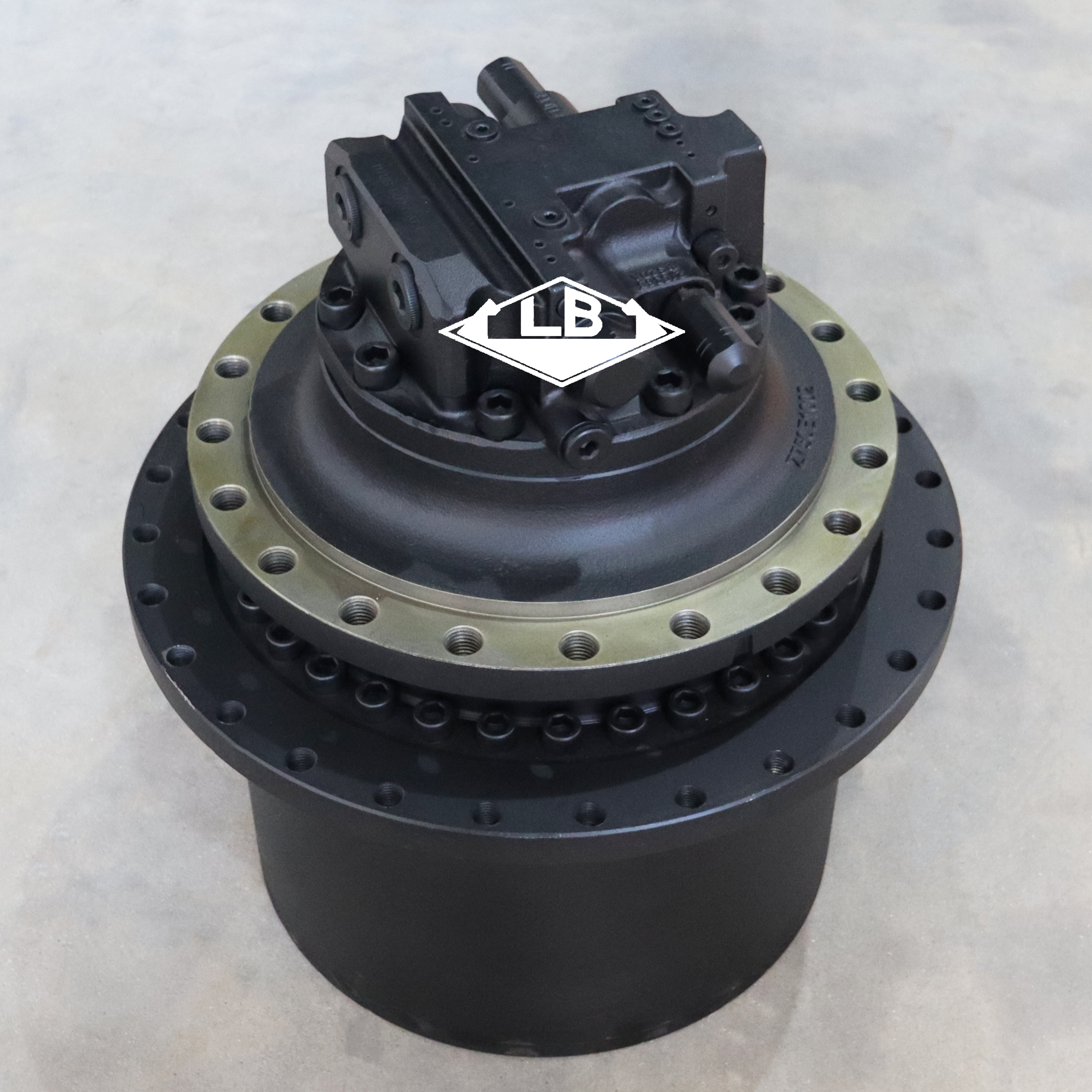
Understanding the internal structure helps you make better purchasing decisions. A complete drive unit contains several distinct engineering sections. Each section plays a vital role in moving massive equipment across rough terrain.
The hydraulic motor converts hydraulic flow and high pressure into physical rotational energy. Hydraulic fluid pumped from the main engine enters the motor section. It pushes against an internal swashplate and piston assembly. This continuous pressure forces the internal shaft to rotate. High-quality motors use precision-machined pistons to ensure maximum efficiency and prevent internal fluid bypassing.
Rotational energy from the hydraulic motor enters the planetary gear set. This section multiplies torque while simultaneously reducing speed. It provides the immense twisting force required for heavy-duty tracking. The system consists of a central sun gear, multiple planetary gears, and an outer ring gear. The sun gear spins rapidly, turning the planetary gears against the stationary ring gear. This collaboration steps down the high-speed rotation into slow, powerful torque.
Bearings and seals represent the primary failure points in severe environments. Extreme cold, heavy mud, and continuous water submersion test the limits of sealing technologies. Bearings support the heavy rotational loads and keep the gears aligned. Oil seals lock lubrication inside while blocking external contaminants. Replacement units demand robust, modern duo-cone sealing technologies to survive harsh working conditions.
Component | Primary Function | Common Failure Cause |
|---|---|---|
Hydraulic Motor | Converts fluid pressure into rotational speed | Contaminated hydraulic fluid scoring the pistons |
Planetary Gear Set | Multiplies torque and reduces rotational speed | Lack of gear oil or gear oil mixed with abrasive dirt |
Main Bearings | Supports loads and maintains gear alignment | Overloading the machine or natural wear over time |
Floating Oil Seals | Keeps oil in and prevents debris intrusion | Abrasive mud drying and tearing the seal material |
Procuring a replacement forces a tough financial calculation. Evaluating your return on investment goes beyond just checking the initial price tag. You must weigh downtime, warranty coverage, and long-term performance.
Original equipment manufacturer parts carry a high initial price tag. Dealership margins significantly inflate these costs. You are often paying a premium for the brand name stamped on the casing. However, OEM becomes strictly necessary in specific scenarios. If your machine operates under a specialized, comprehensive factory warranty, using non-OEM parts might void your agreement. For older machines outside their warranty period, OEM prices rarely justify the investment.
Direct-from-manufacturer aftermarket solutions offer a highly viable alternative. Many operators do not realize quality aftermarket units often come from the exact same global manufacturing hubs as OEM parts. Reputable aftermarket distributors buy directly from these specialized factories. They bypass the heavy dealership markups. A premium hydraulic travel motor from a trusted aftermarket source performs identically to a dealer-sourced unit.
You must remain skeptical of unusually low prices found on generic marketplace websites. Cheaply manufactured units use inferior steel and low-grade seals. They will fail prematurely. Establish a strict baseline before purchasing. A viable aftermarket alternative must offer a minimum of a one-year or two-year warranty. If a supplier refuses to back their product with a written warranty, you should look elsewhere.
Solution Type | Initial Cost | Lead Time | Reliability Expectation |
|---|---|---|---|
OEM Dealership | Highest | Moderate to Fast | Excellent (Guaranteed fitment) |
Premium Aftermarket | Moderate | Fast (If stocked locally) | Excellent (If backed by warranty) |
Rebuilding Old Unit | Variable | Slowest (Labor intensive) | Moderate (Depends on tech skill) |
Ordering the wrong replacement part creates a logistical nightmare. You lose valuable time waiting for shipping, handling return logistics, and reordering the correct unit. Precision is absolutely critical.
Do not guess your machine's specifications based on memory. Before requesting a quote, you must locate and provide four crucial pieces of information to your vendor:
Exact Machine Make and Model: Start with the basics (e.g., Cat 320, Komatsu PC200).
Complete Product Identification Number (PIN) / Serial Number: Manufacturers often change internal components halfway through a production year. The serial number dictates the exact sub-version of your machine.
Stamped Casting Numbers: Clean the dirt off your old unit. Look for stamped casting numbers or metal tag data bolted directly to the casing.
Clear Photos: Take well-lit photos of the hydraulic line hookups, port locations, and mounting bolt patterns. Visual evidence helps vendors confirm alignment.
Real-world fitment demands extreme precision. Consider replacing a Sany travel motor. You cannot simply order any drive meant for a 20-ton machine. You must verify the specific port locations. If the hydraulic flow and return ports sit at incorrect angles, your existing factory hoses will not reach. Modifying steel-braided hydraulic lines on the job site is expensive and dangerous.
Cross-referencing specifications is equally important. When evaluating a heavy-duty GM75VA travel motor assembly, you must match the exact displacement figures. You also need to verify the sprocket bolt hole patterns. A mismatch by even a few millimeters means the track sprocket will not mount to the new unit. This level of diligence ensures your replacement parts arrive ready to install.
The vendor you choose matters just as much as the hardware you buy. The industrial parts market contains many reliable experts, but it also hides online marketers who never touch the parts they sell.
Many websites act simply as drop-shippers. They list parts, take your money, and route the order to an overseas warehouse. They never inspect the components. Teach your procurement team to ask critical questions. Ask if the vendor physically bench-tests their motors prior to shipping. Reputable suppliers hook units up to a hydraulic test bench. They verify pressure ratings, check for leaks, and confirm rotational smoothness. They ship verified components.
Operational value skyrockets when you purchase ready-to-work components. Always look for a complete final drive assembly.
Fully Constructed: Avoid buying units shipped in separate boxes requiring you to assemble the motor to the gearbox.
Pre-filled with Gear Oil: Top-tier vendors ship their planetary gearboxes already filled with the correct viscosity gear oil. This eliminates the guesswork and prevents operators from accidentally running a dry gearbox on day one.
Matching Fittings: Ensure the vendor supplies the correct hydraulic fittings to match your existing lines seamlessly.
Evaluate the hidden costs lurking in vendor policies. Many traditional dealers implement "Core Charges." This is a hefty financial fee charged upfront. They hold your money hostage until you ship the broken unit back to them for remanufacturing. Shipping a heavy hunk of broken steel across the country eats into your budget. We strongly recommend finding modern wholesale vendors who completely waive core charges. Keep your old unit for spare parts or local scrap. Furthermore, prioritize vendors offering expedited freight to minimize your downtime.
Common Mistake: Failing to calculate freight costs before buying. A cheaper motor might end up costing more if the vendor charges exorbitant fees for heavy truck freight delivery to your job site.
Procuring heavy machinery components requires strategy, not guesswork. Base your final purchasing decision on confirmed diagnostic failures rather than assumptions. Gather precise fitment data directly from your machine's stamped plates. Prioritize vendor transparency, robust warranties, and physical bench testing over suspiciously low prices alone. When you follow this framework, you protect your equipment and your project timelines simultaneously.
Take action today by locating your machine's serial number plate. Clean off the dirt, snap a clear photo, and keep it saved on your phone. Consult with your in-house technician to verify current operational symptoms. By preparing this data now, you guarantee a verified compatibility check the moment your tracks stop moving.
A: Rebuilding costs roughly 60% of buying new, but requires significant labor and slow lead times for internal parts. Replacing the unit with a complete new assembly provides an immediate downtime resolution. For businesses where daily machine operation equals direct revenue, swapping in a new assembly proves far more efficient.
A: A core charge is an upfront financial deposit held by some vendors until you return your broken motor to them for remanufacturing. You must pay return shipping on heavy steel. Modern wholesale models often eliminate this hassle completely, saving you money and logistical headaches.
A: You must reiterate exact specifications with your vendor prior to purchase. Provide the machine's complete Product Identification Number (PIN). Confirm the motor displacement figures. Verify the track sprocket bolt hole patterns and measure the exact hydraulic fitting sizes to guarantee perfect alignment.
