
Call Us Now
Jannie Ye: +86 17728636936
Jenny: +86 18127522581
Miriam: +86 15018897468


Views: 0 Author: Site Editor Publish Time: 2026-05-20 Origin: Site


Excavator downtime rapidly erodes project margins. When rotation cycles slow down or become erratic, the core hydraulic swing system is usually compromised. Addressing a failing swing drive is not just about restoring speed. It is a critical safety imperative. This holds especially true if the upper structure experiences drifting on inclines. Unintended rotation poses severe risks to ground crews. It also threatens nearby structures and vehicles.
This guide provides a framework for evaluating, diagnosing, and sourcing a reliable replacement. We balance upfront costs against long-term operational durability. You will learn how to spot early wear indicators before failures ground your machine. We explore internal rebuilding options versus dropping in a complete unit. You will also discover the engineering standards required to vet suppliers effectively. By understanding these mechanical nuances, you can make informed, safety-conscious maintenance decisions. We aim to equip fleet managers and mechanics with actionable procurement strategies.
Safety First: Upper structure drifting on slopes is a critical failure of the swing brake mechanism, requiring immediate machine grounding and diagnosis.
Rebuild vs. Replace: Minor seal wear can be rebuilt, but planetary gearbox damage, sheared pinion teeth, or severe cylinder block scoring makes a complete swing motor assembly replacement the most cost-effective and reliable solution.
Quality Indicators: Top-tier aftermarket replacements match OEM performance by utilizing 42CrMo forged steel gears, Viton multi-lip seals, and rigorous dyno-testing protocols.
Vetting Suppliers: Never purchase a slewing motor without verifying case drain flow test results and compatibility confirmation based on your machine’s specific flange drawings and part numbers.
Catching internal wear early prevents catastrophic damage. You must monitor machine behavior closely during daily operations. Small performance shifts often signal degrading internal components. Operators serve as the first line of defense. They feel changes in the joysticks before mechanics see leaks.
Reduced fluid flow extends cycle times. A pressure drop inside the unit causes noticeable sluggishness. If your machine struggles while loaded but functions fine empty, internal rotating group wear is likely. The pistons or valve plates are bypassing fluid. They fail to hold the necessary pressure. This loss directly translates to wasted fuel and longer loading times.
Smooth rotation is vital for grading or trenching. Internal friction destroys operational precision. Worn piston slippers cause uneven power delivery. Scored valve plates or damaged swash plates also trigger sudden juddering. These symptoms ruin operator accuracy. You will notice the bucket jumping instead of gliding. Such juddering places excessive stress on the boom and stick pins.
This test provides a definitive indicator of internal health. It checks for seal or barrel failure accurately. Mechanics rely on this data to justify repairs.
Park the excavator safely on level ground.
Secure the upper structure mechanically to prevent unintended rotation.
Locate and disconnect the case drain line returning to the hydraulic tank.
Cap the tank port securely to prevent fluid contamination.
Apply full swing pressure over a set time interval using the controls.
Measure the precise volume of fluid escaping the drain port into a clean bucket.
If the internal case drain flow exceeds 10% of the motor's rated displacement, the internal hydraulic sealing has failed. You must schedule immediate maintenance.
Park the excavator on an incline. Release the controls completely. Does the upper structure rotate freely under gravity? If so, the internal hydraulic swing brake mechanism is compromised. This is a severe safety hazard. The machine cannot hold its position. You must ground the equipment immediately. Operating a drifting machine violates basic safety protocols.
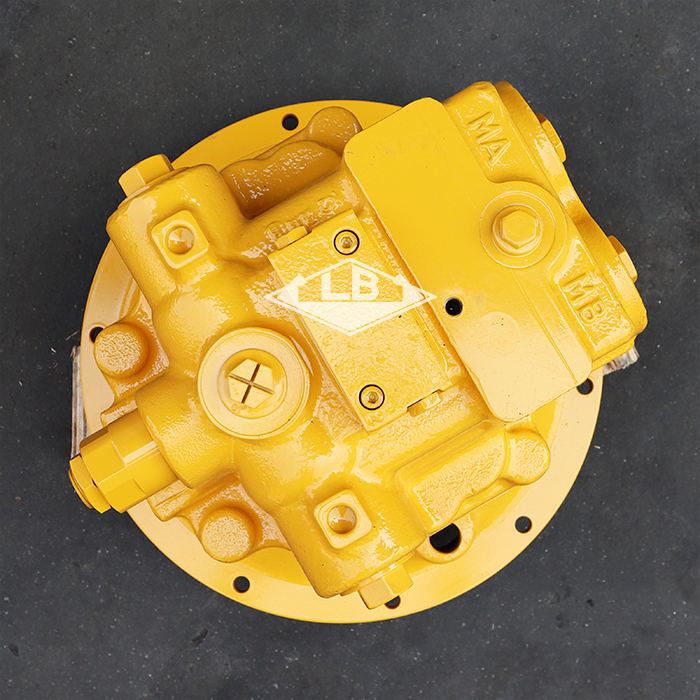
When a machine goes down, you face a major financial decision. Do you rebuild the existing unit or install a complete swing motor assembly? Each path offers distinct advantages. Your choice depends entirely on the damage severity and project urgency.
Rebuilding works best for minor, isolated wear. You can overhaul the unit if the outer casing remains structurally sound. The primary planetary gearboxes must also be completely intact.
Technicians utilize overhaul kits effectively for routine wear.
These kits usually contain seals, center pins, and friction plates.
Mechanics simply swap out the internal piston kits on the bench.
This approach saves capital if the damage remains strictly superficial.
It requires a clean room environment to prevent contamination during reassembly.
Sometimes, rebuilding is impossible or economically reckless. You should opt for a full replacement under specific, severe conditions.
Catastrophic Gearbox Failure: Heavy shock loads can shatter planetary gears into fragments. An output pinion might suffer completely sheared teeth. Rebuilding heavily fragmented gearboxes rarely succeeds. Metal shavings often circulate and destroy new replacement parts.
Un-machinable Damage: Rebuilding requires highly precise tolerances. Sometimes the cylinder block (barrel) or main shaft sustains deep gouges. Mechanics cannot re-machine them within acceptable engineering limits. For instance, line boring limits typically require ±0.03 mm accuracy. Exceeding this tolerance means the casing is scrap. Fluid will simply bypass the loose fittings.
Downtime Constraints: Project deadlines wait for no one. Swapping a complete excavator swing motor gets the machine running fast. It minimizes expensive labor hours compared to complex bench rebuilds. Fast installations keep job sites productive and clients happy.
Not all replacement parts offer equal durability. A premium slewing motor must meet strict engineering tolerances. These rigorous standards ensure the machine handles heavy dynamic loads safely.
The core motor efficiently converts fluid pressure into rotational energy. Modern setups utilize highly optimized displacement metrics. For example, a 90 cc/rev design shortens cycle times significantly. High torque guarantees smooth rotation under heavy bucket loads. Operators experience zero lag during aggressive digging cycles.
Excavators handle violent shock loads daily. Heavy material handling demands hardened internal components. Premium units utilize 42CrMo forged steel for their planetary gears. This specific alloy resists sheer stress effectively. It also withstands thermal degradation during continuous, high-speed operation.
Contamination destroys hydraulic systems rapidly. Premium units integrate Viton multi-lip seals throughout the assembly. These synthetic rubber seals prevent internal fluid bypass entirely. They also block external dirt, dust, and moisture from entering the housing. Standard rubber seals simply melt or crack under extreme hydraulic heat.
Safety depends entirely on immediate stopping power. High-end assemblies include precision-machined main control valves. They also feature highly reliable holding brakes. These critical components ensure a zero-drift stop. They secure heavy loads suspended on steep slopes.
We constructed this table to highlight crucial differences between standard and premium replacement units.
Feature | Standard Market Unit | Premium Assembly |
|---|---|---|
Gearbox Material | Standard cast alloys | 42CrMo forged steel |
Sealing Technology | Single-lip nitrile | Viton multi-lip seals |
Testing Protocol | Basic rotation check | 100% Dyno load tested |
Machining Tolerance | ±0.08 mm | ±0.03 mm |
Fleet managers constantly weigh parts costs against longevity. Selecting a replacement requires analyzing upfront prices versus long-term durability. We must strip away brand bias to find genuine value. Making the wrong choice directly harms your operational budget.
Genuine dealer parts guarantee immediate compatibility. They include standard warranties and authorized support networks. However, they carry a massive 40–60% price markup. This massive premium heavily impacts maintenance budgets. It becomes especially restrictive for older fleets operating on thin margins. You are often paying primarily for the brand logo.
You can achieve equivalent performance through reputable aftermarket channels. Look for manufacturers utilizing magnetic-flux inspection (magna-fluxing). This advanced process detects invisible micro-cracks in reused casings. The supplier must also maintain strict dimensional tolerances. These top-tier options offer significant cost reductions. They do not sacrifice longevity, provided the supplier offers a minimum 12-month warranty.
Beware of deeply discounted parts found online. Bottom-tier, cheaply priced aftermarket units pose massive operational risks. They often use inferior metal alloys. These weak metals warp rapidly under thermal stress and heavy loads. Warping leads directly to misaligned tracks and premature seal failure. Ultimately, cheap parts result in ballooning repair bills. A bargain swing motor often breaks twice as fast.
Procuring a hydraulic swing motor requires meticulous attention to detail. You cannot guess dimensions. Buying the wrong part delays your project for weeks. Proper verification prevents massive logistical headaches.
Never rely on the machine make alone. Two machines from the exact same year might use different flanges. Ensure the supplier requests specific part numbers immediately. They should ask for detailed model variants. For example, confirming exact specs for a PC360 slewing motor is crucial. The same strict matching applies when vetting a specific Komatsu swing motor assembly. Always verify mounting flange dimensions and gear tooth counts before paying.
A reliable supplier happily proves their build quality. They must provide official dyno-verification documents. Demand proof of rigorous load testing simulating real-world conditions. Technicians should simulate 25%, 50%, 75%, and 100% operating pressures on the test bench. These tests verify actual flow rates accurately. They also check for hidden internal pressure drops before shipping the unit.
Document your machine details meticulously before contacting vendors.
Record your excavator's exact serial number from the chassis plate.
Take clear photos of the existing data plate on the motor itself.
Photograph the specific mounting points and hydraulic hose connections.
Request a comprehensive quote outlining all costs.
Ensure the quote explicitly includes lead times and available freight options.
Clear communication prevents costly return shipments and project delays.
Replacing a rotational drive unit represents a major maintenance investment. Choosing between a rebuild and a complete assembly dictates your project timeline. It depends entirely on internal damage severity and your downtime tolerance. Minor seal leaks justify simple overhauls. However, shattered gearboxes demand complete drop-in replacements.
Prioritize suppliers who back their assemblies with transparent testing data. Demand robust warranties and exact-match engineering. These precautions ensure your heavy equipment returns to peak rotational performance safely. Protect your operators by never compromising on holding brake quality. Follow these strict guidelines to secure reliable, long-lasting machine operation. Taking shortcuts during parts procurement always costs more eventually.
A: With proper hydraulic fluid maintenance and filtration, a high-quality replacement should last between 5,000 and 10,000 operating hours.
A: This usually indicates a failing relief valve on that specific directional circuit or uneven wear inside the cylinder block and valve plate.
A: Yes, if the rebuild includes precision machining (like line boring) and brand-new wearable components (bearings, seals, gears). However, a complete new aftermarket assembly often provides equivalent reliability with faster installation times.
A: By conducting a case drain flow test. Measuring the volume of hydraulic oil returning to the tank via the drain line under load will quickly reveal if the internal seals and pistons are bypassing fluid.


